
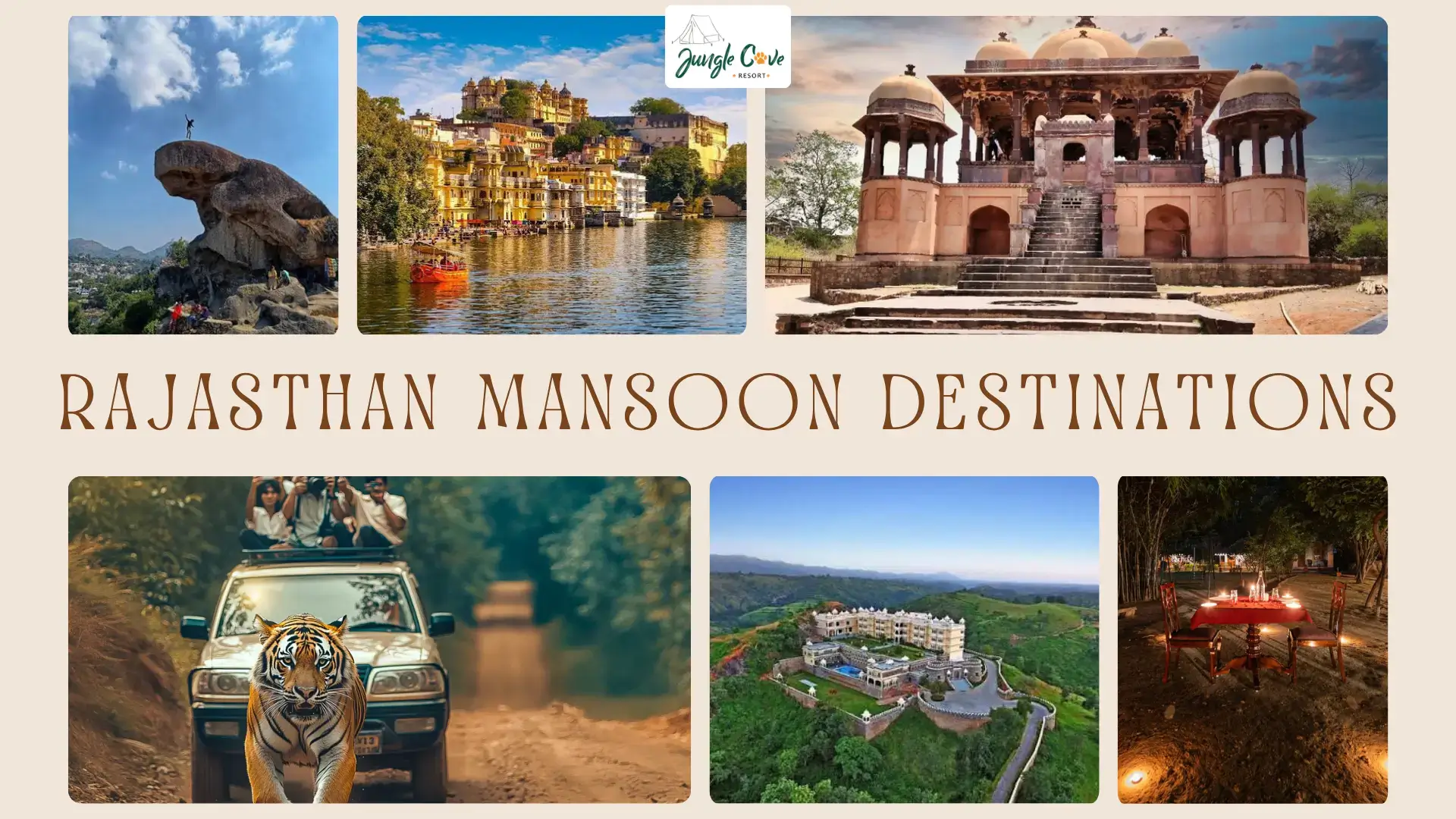
Top Rajasthan Monsoon Destinations for Nature & Wildlife Lovers
Most people picture Rajasthan as a state of dust, forts, and relentless heat — but come July, the rains rewrite that picture completely. Dry scrubland turns emerald, dry riverbeds start flowing again, and the desert state briefly feels like a different country altogether. If you're planning a trip around this season, these are the Rajasthan monsoon destinations worth building your itinerary around, and why a base near Jungle Cave Resort in Ranthambore is a smart starting point for the whole trip.
Why Monsoon Is a Different Rajasthan Altogether
From July through September, temperatures drop well below the summer highs, dusty grasslands turn a deep green, and lakes and step-wells across the state fill up again. Crowds thin out, rates soften, and the light — heavy clouds, sudden sun breaks, rain-washed stone — is a photographer's favorite. It's not the season for open jeep tiger chases in every zone, but it is the season for slower, greener, quieter travel.
Ranthambore in the Monsoon
Ranthambore National Park is best known for its Bengal tigers, but the forest itself changes character entirely once the rains set in. The dry deciduous cover thickens into deep green, the lakes around Jogi Mahal and Padam Talao fill up, and the Aravalli hills surrounding the park turn a shade of green you won't see the rest of the year.
What Changes During Monsoon Season
Ranthambore National Park's core safari zones remain closed from July 1 to September 30 each year, allowing the forest and its wildlife to rest and thrive during the breeding season. While this period is not suitable for a core-zone tiger safari, selected buffer zones remain open for visitors who wish to enjoy a wildlife safari. Beyond the park, the monsoon season offers plenty to explore, including the majestic Ranthambore Fort, serene lakes, ancient temples, and the region's lush green landscapes. To learn more about safari options, timings, and booking details, visit our dedicated Tiger Safari Page.
Best Monsoon Experiences Near the Resort
Even with core safaris on pause, there is still a lot to do near Ranthambore in the monsoon:
- Ranthambore Fort: This old fort looks amazing rising out of the monsoon clouds. It's a UNESCO World Heritage Site, and the walk up is much easier in the cool, cloudy weather than in the summer heat.
- Ganesh Temple: This temple sits inside the fort and is a simple, peaceful stop to add to your day.
- Gharial Sanctuary: Set along the Chambal River, this is a good spot to see gharials and other river life up close.
- Museum of Natural History: A great indoor option if it starts raining hard.
- Cave Rooms or Swiss Tents: Back at the resort, unwind as you watch the rain gently fall over the lush jungle from the comfort of your room. Thoughtfully designed to blend seamlessly with the surrounding forest, each accommodation offers a peaceful retreat where nature feels just outside your window. To explore the room options and amenities, visit our dedicated Accommodation Page.
Other Top Monsoon Destinations in Rajasthan
If your trip has room for more than one stop, a handful of other Rajasthan destinations come into their own during monsoon.
Mount Abu — Rajasthan's Only Hill Station
Mount Abu is the obvious monsoon pick for anyone chasing cooler air. Nakki Lake fills up, waterfalls like Trevor's Tank start flowing, and the viewpoints around Sunset Point disappear into and reappear out of monsoon mist through the day.
Udaipur — The Lake City in Full Bloom
Udaipur's lakes are the whole point of a monsoon visit here. Lake Pichola and Fateh Sagar rise to their fullest levels of the year, and the City Palace and surrounding ghats look their most photogenic against a moody, cloud-heavy sky.
Kumbhalgarh — Fort Views Through the Mist
Kumbhalgarh Fort, with its 36-kilometre wall, is dramatically quieter in monsoon than in peak winter season, and the hills around it turn a green rarely seen the rest of the year — well worth the detour if you're already routing through southern Rajasthan.
Planning Your Monsoon Trip to Rajasthan
A sensible route for a nature-and-wildlife-focused monsoon trip is to base yourself in Ranthambore first for the fort, the lakes, and the forest scenery, then move on to Mount Abu or Udaipur if your itinerary allows for it. Since core-zone safaris pause through September, this is also a good stretch to plan an early-October return once the gates reopen — proximity to the safari entrances matters most on those first mornings back, and it's one of the reasons guests choose to stay close to the park rather than in Sawai Madhopur town. You can check current rates and room availability for either season on our booking page.
Whichever season you visit in, pack light rain protection, quick-dry layers, and shoes with decent grip for wet stone steps at the fort and temple. Mount Abu evenings can turn cool enough for a light jacket even in August.
Frequently Asked Questions About Rajasthan in the Monsoon
Is monsoon a good time to visit Rajasthan?
Yes. Monsoon (July to September) cools Rajasthan's usual heat, turns the landscape green, fills lakes and step-wells, and brings fewer crowds and lower rates at most properties, making it a rewarding time for nature and photography-focused travelers.
Is Ranthambore National Park open during the monsoon?
The core safari zones of Ranthambore National Park close from July 1 to September 30 for the breeding season, while select buffer zones stay open for safaris. The monsoon months are still an excellent time to base yourself near the park for the scenery, the fort, and nearby sights, with core-zone tiger safaris resuming from October.
Which is the best hill station to visit in Rajasthan during monsoon?
Mount Abu, Rajasthan's only hill station, is the top monsoon pick, with misty viewpoints, waterfalls, and cooler temperatures than the rest of the state.
How far is Jungle Cave Resort from the Ranthambore safari gates?
Jungle Cave Resort is just minutes from the main entry points of Ranthambore National Park, which matters most once core-zone safaris resume in October and early gate access counts.
What should I pack for a Rajasthan monsoon trip?
Pack light rain protection, quick-dry clothing, and comfortable walking shoes with grip, along with a light jacket for cooler evenings at hill destinations like Mount Abu.
When should I book my stay for the monsoon season?
Monsoon is a quieter travel window, so bookings are more flexible than peak season, but it is still worth reserving your room a few weeks ahead to get your preferred Cave Room or Swiss Tent.
